Villa Fixtures When You Move: Chandeliers, Built-Ins and What Stays
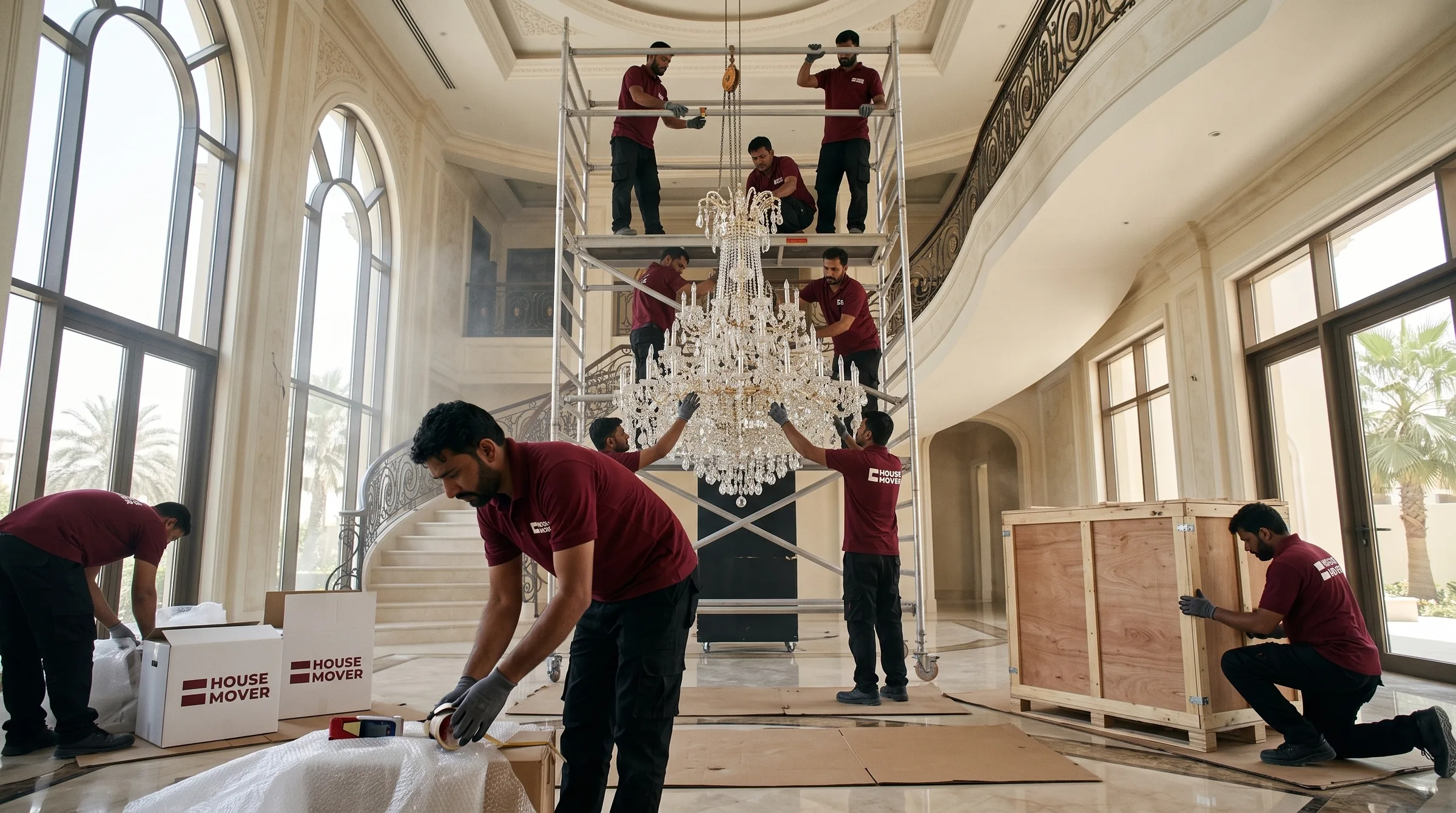
Built-in wardrobes, fixed lighting, and other permanent fixtures generally stay with your Dubai villa when you move out, but some fittings require the landlord's approval. Chandeliers, fitted shelves, curtains, blinds, AC units, and water heaters raise different questions about ownership, removal, and property handover.
The situation becomes complicated when you have paid for a chandelier or installed custom wardrobes yourself. Removing these fittings without permission can lead to repair costs or security deposit disputes. Dubai's tenancy law, Article 23, restricts the removal of leasehold improvements unless both parties agree otherwise. Checking the original inventory and tenancy agreement helps identify what stays, what moves, and which fixtures require written approval.
What Counts as a Fixture?
A fixture is an item attached to a property for permanent use. Built-in cabinets, fixed ceiling lights, wall-mounted sanitary fittings, and integrated cooling systems are common examples.
Movable belongings remain separate from the building. Freestanding wardrobes, table lamps, portable appliances, and loose furniture usually fall into this category.
The distinction has a legal basis. Dubai's Law No. 33 of 2008, Article 2, defines real property to include immovable property and everything attached or annexed to it. However, your tenancy contract and installation records remain essential.
How can you identify fixtures before moving?
Use these 5 checks:
- Check the inventory
- Inspect attachment points
- Review ownership
- Examine alterations
- Confirm removal rights
An item's attachment does not always make it permanent. A freestanding cabinet secured for safety differs from a wardrobe constructed inside a wall recess.
Which fixtures usually stay or move?
This table covers 16 common villa fittings. Each classification assumes a standard tenancy without a separate ownership or removal agreement.
Fixture or item | Usually stays or moves | Who removes it? |
|---|---|---|
Original chandelier | Stays | Nobody |
Tenant-installed chandelier | Agreement required | Qualified electrician |
Fixed ceiling spotlights | Stays | Nobody |
Built-in wardrobes | Stays | Approved specialist if removal permitted |
Freestanding wardrobe | Moves | Tenant or moving crew |
Built-in wall shelving | Stays | Approved specialist if permitted |
Freestanding bookshelf | Moves | Tenant or moving crew |
Original curtain tracks | Stays | Nobody |
Tenant-owned curtain fabric | Usually moves | Tenant or packing crew |
Landlord-provided blinds | Stays | Nobody |
Tenant-installed motorized blinds | Agreement required | Qualified technician if hardwired |
Fixed split AC system | Stays | AC technician if removal permitted |
Portable air conditioner | Usually moves | Tenant or moving crew |
Fixed water heater | Stays | Qualified technician if authorized |
Original bathroom mirror | Stays | Nobody |
Freestanding storage cabinet | Moves | Tenant or moving crew |
The table provides practical classifications, not a statutory schedule. Contract terms, fixture ownership, and written agreements can change individual outcomes.
The main distinction is between movable personal property and installed improvements. Article 21 of Dubai's tenancy law requires tenants to return properties in their original condition, allowing for ordinary wear and tear.
Document both the original fittings and any changes made during your tenancy.
Chandeliers and Light Fittings
Landlord-provided chandeliers and permanent light fittings generally stay with the villa. Tenant-installed decorative lighting requires an agreement before removal.
A dining-room chandelier presents two separate questions: who owns the fitting and who can disconnect it safely.
Can you take a chandelier when leaving a Dubai villa?
You can take a tenant-installed chandelier when the landlord agrees to its removal and any required restoration. Buying the chandelier does not independently establish a right to remove it.
For example, you may replace an original ceiling light with your own crystal chandelier. The original fitting still forms part of the property's handover condition.
Before removing the replacement, confirm whether the landlord expects the original light to be returned. Document its condition and arrange proper reinstallation.
A chandelier attached to a ceiling bracket also presents a technical issue. The fixture may have several glass components, a heavy metal frame, and concealed electrical connections.
The Dubai Electricity and Water Authority (DEWA) electrical installation regulations address electrical safety and technical requirements. Use a qualified electrician for hardwired fixture disconnection and restoration.
Who removes chandeliers and ceiling lights?
A qualified electrician handles approved disconnection of hardwired chandeliers and restoration of electrical connections.
Crystal chandeliers often contain separate decorative pieces, a supporting frame, suspension hardware, and electrical components.
Before removal:
- Photograph the complete chandelier and its mounting position.
- Confirm that the landlord approves removal.
- Arrange electrical disconnection by a qualified technician.
- Protect detachable glass and crystal components individually.
- Retain mounting hardware and installation instructions.
Dubai Municipality's contractor licensing standards establish professional requirements for regulated contracting activities.
Do not assume furniture movers provide electrical installation services. Confirm specialist work separately.
An unfinished ceiling connection or damaged mounting point can create a handover dispute.
Built-In Wardrobes and Shelving
Built-in wardrobes and fitted shelving generally remain in a rented villa because their installation forms part of the property.
Freestanding wardrobes and independent storage furniture usually move with your household belongings, subject to the original inventory and tenancy agreement.
Can you remove built-in wardrobes when moving?
You cannot remove fitted wardrobes merely because their panels contain detachable screws.
Custom wardrobes can connect directly to walls, ceilings, flooring, skirting boards, and concealed electrical fittings. Removal can expose unfinished surfaces or damage surrounding finishes.
Compare two bedroom storage arrangements:
- Freestanding wardrobe: A modular cabinet standing independently, with removable safety brackets.
- Built-in wardrobe: A custom cabinet fitted into a recess with wall panels, fixed tracks, or integrated lighting.
The first typically qualifies as movable furniture. The second is more likely to constitute a permanent installation.
What if you purchased the built-in wardrobe?
A tenant-funded fitted wardrobe may qualify as a leasehold improvement. Dubai's Article 23 prohibits removing these improvements at handover unless both parties agree otherwise.
For example, a custom wardrobe installed across an entire bedroom wall can become part of the villa's fitted interior. Discuss ownership before installation, especially for expensive joinery.
The written agreement can specify removal permission, reinstatement requirements, or whether the fitting remains with the villa.
What happens to wall-mounted shelves?
Original built-in shelves stay unless the landlord authorizes changes. Tenant-installed shelves require an assessment of their construction and attachment method.
Removing brackets can leave holes, broken plaster, damaged paint, or exposed wiring around integrated lighting.
Dubai Land Department's tenancy guidance distinguishes ordinary wear from property damage when addressing security deposit responsibilities.
Keep photographs of wall surfaces before and after any approved removal.
Curtains and Blinds
Curtains and blinds have different removal conditions depending on ownership, installation method, and the tenancy agreement.
Loose curtain fabric is easier to remove than fixed tracks, motorised blinds, or brackets attached to finished walls.
Can you take curtains when moving out?
You can generally remove personal curtains hanging from existing tracks when the tenancy agreement contains no contrary condition.
Curtain panels suspended by hooks, rings, or removable fasteners usually detach without altering the building.
However, landlord-provided curtains listed in the entry inventory remain part of the rented property's contents.
Check the inventory before packing any supplied window coverings.
Do curtain rods and tracks stay?
Original curtain rods, ceiling tracks, and fitted brackets normally stay with the property.
Tenant-installed tracks require closer attention. Drilled brackets can damage plaster or leave visible holes after removal.
Check whether the landlord permits you to take the hardware and restore the mounting surface.
An adhesive temporary hook may be removable, but damaged paint or wall finishes can still create a restoration issue.
Are motorised blinds considered fixtures?
Motorised blinds often form part of a fixed window installation, particularly when connected to concealed electrical wiring.
Check whether the system includes a wall switch, wired controller, or integrated power supply. Battery-operated removable blinds have different handling requirements.
For landlord-installed motorised blinds, leave the complete assembly in place.
For tenant-installed systems, obtain removal approval and arrange qualified technical assistance where electrical connections are involved.
Photograph the blinds in their open and closed positions before handover. This records their operation without requiring unnecessary dismantling.
AC Units and Water Heaters
Fixed air-conditioning units and water heaters generally remain with the rented villa. Portable appliances usually move when you own them.
These installations often connect directly to the property's electrical, cooling, drainage, or plumbing systems.
Can you remove an AC unit from a rented villa?
Do not remove a fixed air-conditioning unit without confirming ownership and receiving the landlord's approval.
A split AC system can include an indoor unit, outdoor condenser, refrigerant lines, electrical connections, and drainage pipes.
Ducted systems also connect to concealed infrastructure. Removing these components involves more than transporting an appliance. Incorrect disconnection can damage equipment, pipework, and interior finishes.
Even where the landlord approves removal, use an appropriately qualified AC technician.
Who owns an AC unit replaced during tenancy?
A replacement AC unit does not automatically become removable personal property because you paid its invoice.
Article 16 of Dubai's tenancy law assigns maintenance affecting intended property use to the landlord unless the parties agree otherwise.
The replacement arrangement determines how that general responsibility applies to a particular installation.
Keep the installation invoice and written landlord approval.
Can you take a fixed water heater?
A permanently installed water heater usually stays because it connects to the villa's water and electrical infrastructure.
Its removal can leave disconnected pipes, exposed wiring, or an unusable hot-water system. Obtain permission before replacing or disconnecting a fixed heater.
When should you disconnect DEWA services?
Complete approved electrical and plumbing restoration before arranging final utility disconnection.
DEWA publishes these standard move-out figures:
DEWA service detail | Published figure |
|---|---|
Small-meter disconnection | AED 125 |
Large-meter disconnection | AED 300 |
Knowledge fee | AED 10 |
Innovation fee | AED 10 |
Deactivation processing window | Within 24 working hours |
Final bill issuance | Within 24 working hours of selected disconnection |
These charges concern utility deactivation, not fixture removal. DEWA also lists eligibility-based discounts and specific service conditions.
The 24-working-hour window applies to processing and billing, not to completing electrical repairs.
Agreeing With the Landlord
A written fixture agreement confirms what stays, what moves, who handles removal, and what restoration the landlord expects.
It reduces uncertainty around tenant-installed chandeliers, custom wardrobes, curtain tracks, and additional cooling equipment.
What legal rules apply to fixture removal?
Five provisions of Dubai Law No. 26 of 2007 are especially relevant:
Article | Requirement | Fixture implication |
|---|---|---|
16 | Landlord maintenance responsibility, unless otherwise agreed | Relevant to fixed AC and water heaters |
19 | Landlord permission and required licences for property changes | Relevant to installed fittings |
20 | Return of security deposit or remaining balance | Relevant to repair deductions |
21 | Return property in original condition, except for permitted wear or circumstances | Relevant to dismantling damage |
23 | No removal of tenant-made leasehold improvements unless agreed | Relevant to fitted wardrobes and installed fixtures |
These provisions establish the general legal framework. They do not assign fixed ownership percentages to chandeliers, cupboards, or other household fittings.
How do you get permission to remove fixtures?
Use a written, item-specific request rather than a general statement about taking personal belongings.
- Identify the fixture. Include its room, description, and photographs.
- Explain ownership. Attach receipts or earlier installation approval.
- Request removal consent. Specify the exact fitting.
- Confirm restoration. Identify any original equipment requiring reinstallation.
- Assign responsibility. Record who performs technical work and pays the agreed costs.
- Document completion. Photograph the restored area before handover.
Keep the landlord's response with your tenancy documents.
An email can preserve useful correspondence but obtain clear confirmation from the landlord or authorized representative. Silence does not establish permission.
Can your moving company dismantle fixtures?
Furniture movers can dismantle suitable movable furniture, but permanent electrical and plumbing installations require separate technical assessment.
The E House Mover UAE service for villa movers in Dubai identifies furniture dismantling, protective packing, transportation, and reassembly as available moving services.
Its service page also explains that crew requirements, vehicle capacity, handling time, and pricing depend on the property survey.
Identify approved fixtures before requesting your quotation. Exclude landlord-owned fittings from the transport inventory.
What happens if the landlord disputes removal?
Pause the disputed removal and compare your tenancy agreement, entry inventory, installation approvals, and photographs.
Dubai Land Department advises tenants to obtain evidence confirming the property's return at the end of a lease.
For unresolved tenancy disputes, the Rental Disputes Center (RDC) provides a formal settlement process.
The RDC publishes these figures for monetary claims:
- Claim registration: 3.5% of the claimed amount.
- Minimum registration fee: AED 500.
- Maximum registration fee: AED 15,000.
- Published registration processing time: One business day.
Additional fees can apply. The RDC requires supporting documents in Arabic or legally translated into Arabic.
These figures explain the potential administrative cost of a dispute. They do not determine whether a particular fixture belongs to you.
Resolve the fixture list before moving day wherever possible.
Before You Hand Over the Keys, Confirm What Stays
A chandelier you purchased may still require removal approval, while a built-in wardrobe can remain part of the rented villa. The difference depends on ownership, installation, and your tenancy agreement. Removing fixtures without checking these details can leave damaged walls, unfinished electrical connections, or disagreements over your security deposit.
Before moving day, compare your packing list with the original property inventory. Photograph fixed fittings, get written approval for anything you intend to remove, and arrange qualified technicians where necessary. Keep the records until the landlord confirms the final handover.
FAQs
- What fixtures must you leave when moving out of a Dubai villa?
- Original chandeliers, built-in wardrobes, fixed shelving, curtain tracks, integrated AC systems, and water heaters generally stay. Your tenancy agreement and written permissions determine exceptions.
- Can a Dubai landlord keep a chandelier you purchased?
- A tenant-installed chandelier may qualify as a leasehold improvement. Article 23 of Dubai's tenancy law restricts removing such improvements unless both parties agree otherwise.
- Can you move built-in wardrobes to another house?
- Moving built-in wardrobes requires landlord approval when they form part of the fitted property. Freestanding modular wardrobes usually move as personal furniture.
- Can you take blinds and leave the curtain tracks?
- Tenant-owned removable blinds may move, subject to your agreement. Original tracks and landlord-provided coverings usually remain. Confirm permission before removing fitted or hardwired installations.
- Who pays for damage after removing fixtures?
- Responsibility depends on the damage, tenancy terms, and removal agreement. Dubai Land Department distinguishes tenant-caused damage from ordinary wear when explaining deposit deductions.
- Does the landlord return the deposit if fixtures stay?
- Leaving fixtures does not independently guarantee the entire deposit. Article 20 requires the landlord to return the deposit or remaining balance, subject to the applicable property condition obligations.
- Can movers disconnect fixed AC units or water heaters?
- Standard furniture movers do not automatically provide electrical, refrigeration, or plumbing disconnection. Arrange qualified technicians for approved technical work and confirm transportation separately.
- What is the safest way to hand over villa fixtures?
- Compare the original inventory with the final fixture list, obtain written approval for exceptions, and photograph restored areas. Keep the signed handover record, utility clearance, and related correspondence.



Planning a move in Dubai?
Tell us the buildings at both ends and roughly when. We will come back with a price and what the day looks like.
- Call us: +971 55 392 8484
- WhatsApp: +971 55 392 8484
- Email us: info@ehousemoveruae.com
- Address: Warehouse #8, Street 5B, Al Quoz Industrial Area 1, Dubai